
Tips for happy re-homing
Thinking About Adopting a Dog?
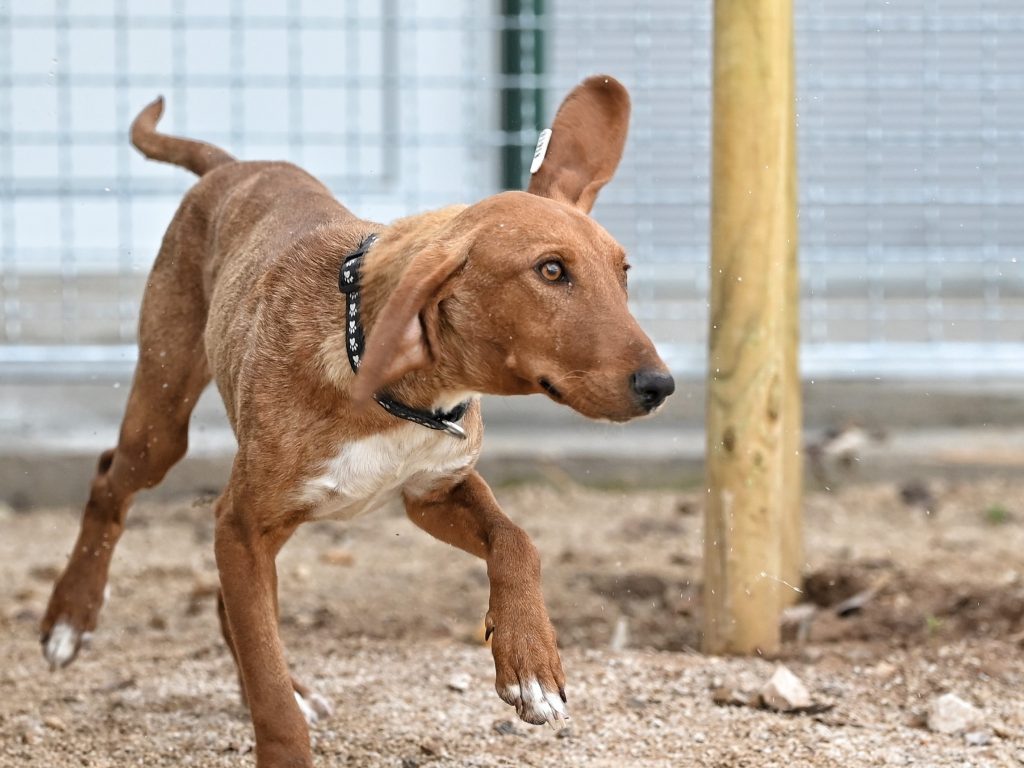
Congratulations on deciding to adopt a new friend for life! Being a responsible dog owner is about more than simply feeding your dog, or taking it for a walk – it is a decision that will last the dog’s lifetime, so it is important to consider carefully all the things you will have to plan for your new friend. This will also help you to decide which dog will suit you and your family and lifestyle the best, and help to ensure a truly happy ending!
Exercise – How much time and energy can you devote to exercising your dog each day?
Most dogs need to be exercised at least twice a day, in all weathers. Dogs that are not
exercised regularly will often develop behaviour problems. Consider carefully whether you
are looking for a highly active dog that will need long walks, or an older, quieter or smaller
dog who may require less exercise.
Socialisation – How much experience do you have and how much time can you give to your new dog?
Some dogs will require more training and support to settle into a new home than
others – but they will all need a period of readjustment to learn new routines and
expectations, and a lot of love and attention. In order to find the right dog for your family
you will need to consider the time and skills you have available, and the needs of other
household members, pets, and your other commitments. To help with this process we
will discuss your previous experience with pets, who else lives in your home, how many
hours a day you are out of the house, what kind of space is available in your house and garden, and how much time you have to give to your new pet. A highly active dog will not
suit you if you do not have time or energy for long regular walks, a small puppy will not
be happy in your home if you cannot devote a significant amount of time and attention
to it, and an old dog will probably not enjoy hiking for two hours every day!
Environment – how much space do you have in your home?
Your dog will need a quiet safe space that he feels is his own in order to settle in more
quickly and happily. If you have outside space you need to ensure it is fully and
adequately fenced for the size and activity level of the dog. If you do not have secure
outside space, you need to consider how you will deal with this, and ensure there is a
safe inside space where your dog can be left unattended if need be. Do you have room
for a big active dog, or only a small dog?
Training – are you willing to learn along with your dog?
All dogs can be trained with positive, reward-based training – but you will need to put in
the effort to make this happen. Dogs do not know the rules unless we teach them with
patience and care and in a positive way. Both you and your dog will be happier if he is
well socialised with both people and other animals, and is easy to control. Lots of useful
information about dog training can be found on the internet, but the key thing to
remember is that dogs respond best to reward based training. By consistently rewarding
and praising good behaviour (with food, attention, treats), a dog can soon be trained.
However, using punishments for bad behaviour, especially with dogs that suffered bad
experiences in the past, will only confuse and frighten the dog.
Home alone – how many hours a day are you out of the house?
Dogs are very much companion animals and do tend to suffer if left alone for extended
periods of time. As a general rule of thumb, an adult, mature dog over five years old
should not be left for more than four to six hours on a regular basis. A dog younger than
this can generally be left for a couple of hours but puppies should not really be left alone
at all when they are very young, and the time they spend alone should be very gradually
built up.
Health – can you afford vet care for your new dog?
All our dogs are fully vaccinated and tested for common insect borne and infectious diseases prior to adoption. However, unexpected problems can arise for a number of reasons, especially for dogs who have been living in a shelter, or in older dogs. Some dogs also have long term conditions which will need constant attention or regular check-ups. We will provide you with all the necessary information and advice for such dogs, and the website highlights if dogs do have special health needs. All dogs will need annual vaccinations, and preventive treatments – for example against parasites, ticks, mosquitoes and fleas. Please consider the cost of regular and routine vet care and ensure you have the necessary finances to provide an adopted dog with the best care possible.
Help – do you have people who can look after your dog if you need to go away?
You should only entrust your animal to friends or neighbours if you are confident they will take care of them properly.
Join our mission! Contribute by donating to support or become a volunteer to help abandoned dogs find a happy home.